Google Cloud's latest updates pivot towards autonomous agents with the release of Gemini 3 and the Antigravity development platform, reshaping enterprise AI strategies for 2026.
Moving beyond simple chatbots, Microsoft's 2025-2026 roadmap introduces autonomous 'Agentic' workflows, prioritizing security and developer control over raw generative speed.
Following a year of aggressive expansion, SAP's strategic launch of AI Co-Innovation Labs and sovereign partnerships signals a shift from standalone features to a collaborative, ecosystem-driven approach for digital reinvention.
Following the mixed reception of Llama 4 and rising competition from Chinese models, Meta enters 2026 with a hybrid strategy featuring advanced multimodal tools and a potential pivot to closed models.
Just months after the debut of GPT-5, OpenAI has rolled out GPT-5.2 to counter Google's Gemini 3, introducing advanced 'Thinking' models and enhanced coding capabilities while facing significant legal challenges.
With the rollout of the Winter '26 release and the maturity of the Agentforce vision, Salesforce has fundamentally shifted the CRM landscape. This analysis explores how Einstein Flow's natural language automation is reducing technical debt and enabli...
Following a year of delays, pivots, and intense competition, OpenAI closes 2025 with a three-tiered model release aimed directly at Google. We analyze the technology, the timeline, and the business implications.
As the hype settles, 2025 emerges as the definitive year for AI integration. New data reveals a widening gap between early adopters deploying autonomous agents and legacy firms struggling to move beyond experimentation.
Oracle's integration of AI-driven self-optimization and open standards aims to disrupt the cloud database market, challenging incumbents with the new 'Autonomous AI Lakehouse' strategy.
Explore the transformative potential of localized, on-device Artificial Intelligence (Edge AI) in India by 2026. Understand its importance for data sovereignty, latency, and connectivity, and discover use cases in mobile apps, smart factories, and sm...
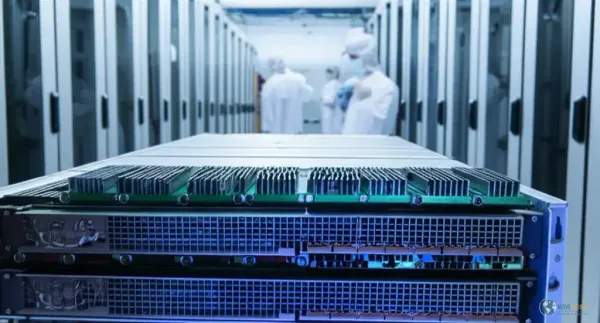
As cloud providers like IBM and Dell scale up Intel's latest AI accelerators, the data center market sees a shift toward open standards and cost-efficiency over raw speed.


 IndiaNIC