

According to research from Gartner, over eighty percent of enterprise generative AI deployments fail to deliver measurable business ROI when executed without human-in-the-loop workflows. If you are pouring capital into standalone neural networks expecting fully autonomous operations, you are actively burning your technology runway. What seems like an automated silver bullet on paper quickly degrades into costly hallucination loops, unvetted liability, and catastrophic data breaches when left unguided.
After twenty-five years of founding software ventures and scaling high-performance engineering ecosystems from Gujarat to global markets, I remain relentlessly bullish about artificial intelligence. Yet what nobody tells you is that algorithms do not generate enduring commercial breakthroughs in isolation; miracles occur only when we pair high-velocity computational power with deliberate human context, emotional nuance, and rigorous engineering orchestration.
The Paradigm Shift: Moving Beyond Autonomous Hallucinations
The enterprise technology narrative has shifted dramatically between 2024 and 2025. In the opening wave of generative adoption, organizations rushed to replace human touchpoints with uncalibrated language models, hoping for immediate overhead reductions. The results were predictable: flawed customer interactions, fragile operational logic, and brittle edge-case handling.
According to research published by McKinsey, organizations that implement synchronized human-AI orchestration realize three times higher operational productivity gains than those pursuing blunt, total automation. We are now entering an era defined by collaborative intelligence. In this new paradigm, artificial intelligence acts as a tireless cognitive accelerator, while human specialists supply domain ethics, strategic steering, and qualitative validation.
When knowledge teams treat machine learning as an augmentative sparring partner rather than an autonomous replacement, output quality scales exponentially. This hybrid dynamic unlocks game-changing breakthroughs across mission-critical verticals that cannot tolerate probabilistic errors.
Three Pillars Where AI and Human Orchestration Creates Miracles
To grasp the tangible commercial impact of this collaborative doctrine, leaders must examine where machine speed and human intuition intersect to solve stubborn industry challenges. We see this transformation unfolding across three core domains.
Revolutionizing Clinical Precision and Compassionate Healthcare
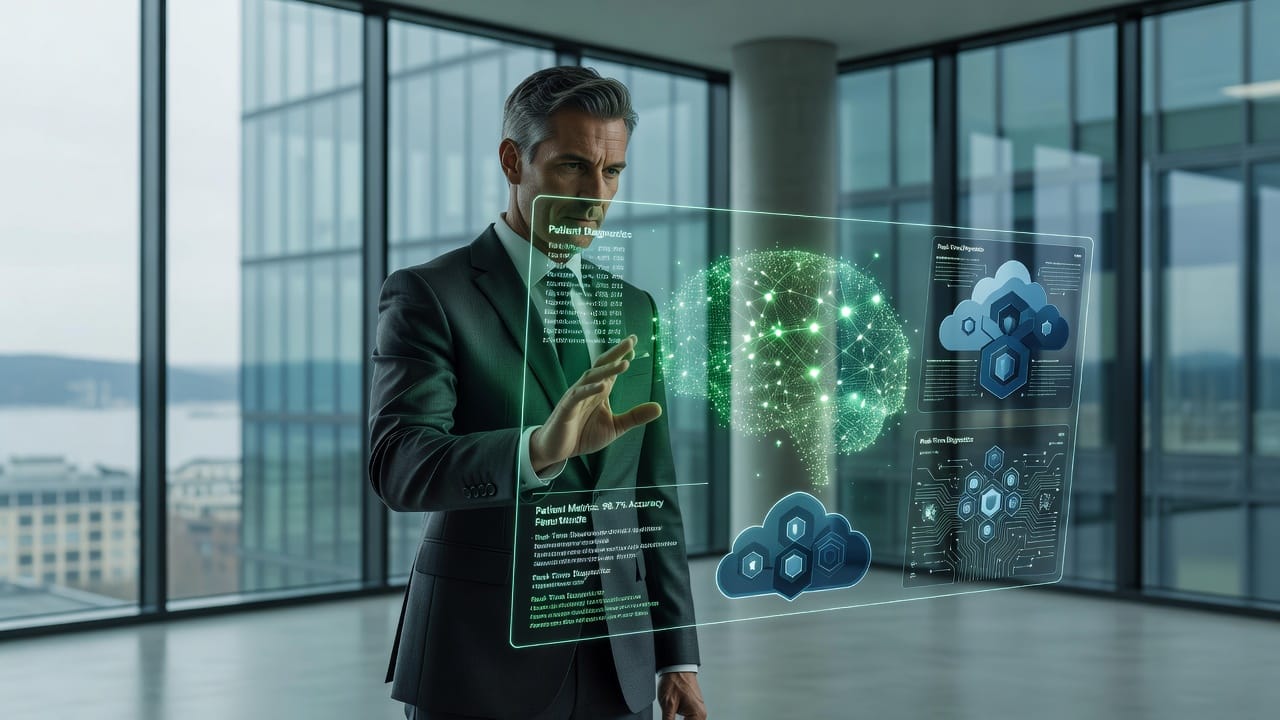
Healthcare represents the ultimate proving ground for high-stakes AI orchestration. Machine learning models excel at ingesting vast biomedical corpora, spotting micro-fractures in radiological imaging, and modeling molecular compounds in seconds. However, diagnosis is never purely statistical. Clinical medicine demands bedside empathy, patient history context, and complex ethical judgment that no neural weight can replicate. When intelligent algorithms serve as real-time diagnostic copilots for seasoned physicians, diagnostic misclassifications plunge while clinical velocity doubles.
In November 2024, a healthcare diagnostics partner in the United States approached our engineering team at IndiaNIC with an urgent crisis: their automated imaging pipeline, despite using cutting-edge foundational models from OpenAI, was returning a six percent false-positive rate on critical oncology scans due to uncalibrated edge data. Instead of simply adding more neural layers, we re-architected their entire ingestion pipeline to deploy dual-tier radiologist validation loops alongside real-time anomaly alerting, dropping diagnostic errors to near zero within forty-five days. That turnaround proved once again that human oversight is not a friction point in modern computing; it is the ultimate reliability engine.
Transforming Complex Industrial Logistics and Global Services
In global supply chains, predictive algorithms can forecast localized equipment maintenance needs and optimize intermodal freight routes amid extreme volatility. Yet when geopolitical disruptions or catastrophic weather events derail shipping routes, automated heuristics fail. Experienced logistics controllers bring instinctive geopolitical awareness and multi-stakeholder negotiation skills to the table. By orchestrating automated algorithmic forecasting with rapid human operational intervention, enterprise logistics networks maintain uninterrupted delivery continuity.
Fortifying Next-Level Enterprise AI Model Security
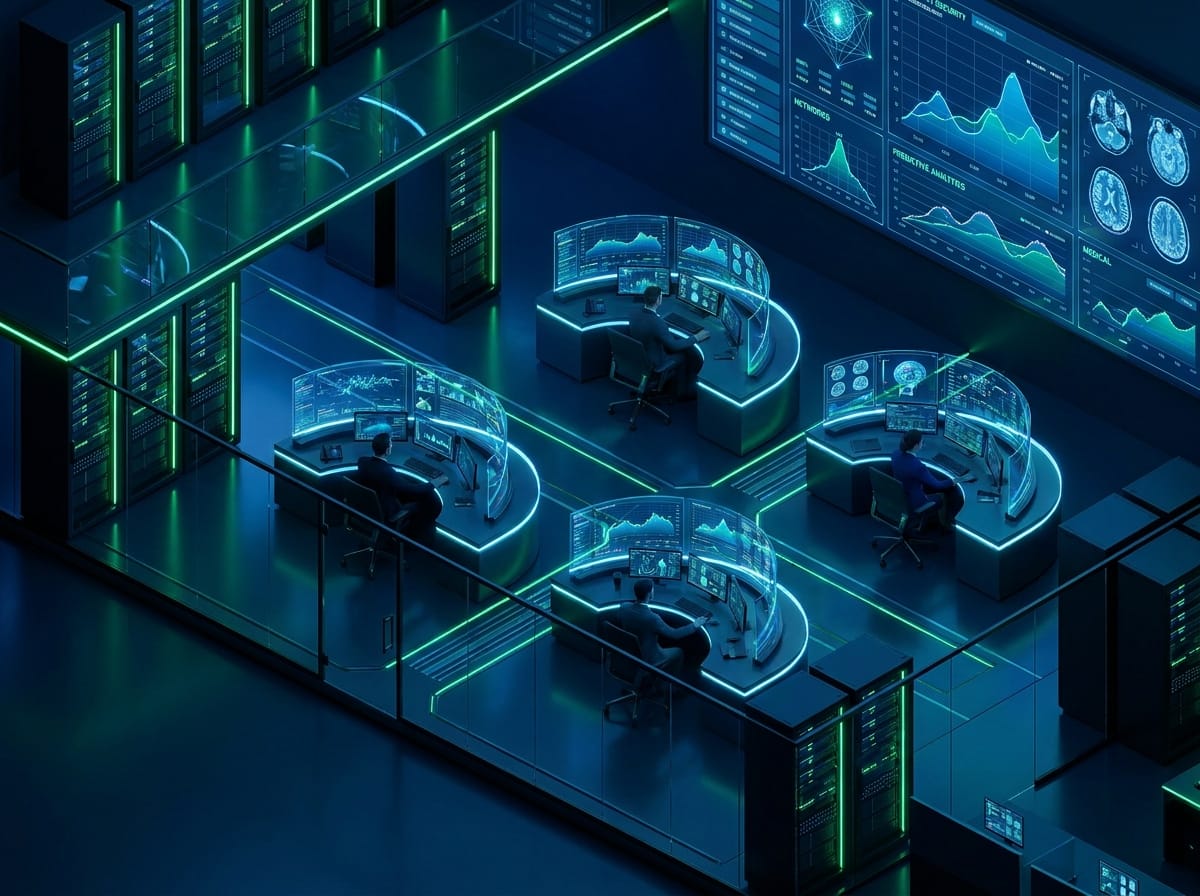
Enterprise adoption stalls whenever proprietary intellectual property is exposed to data poisoning, indirect prompt injections, or unauthorized model inversion attacks. Establishing ironclad defenses requires structured frameworks, such as those pioneered by IBM, combined with multi-layered human verification. Security cannot remain an automated afterthought; human security architects must constantly red-team model outputs, inspect data sanitization pipelines, and enforce zero-trust policies across internal inferences.
The IndiaNIC Blueprint: Step-by-Step AI Model and Security Implementation
After working through this with dozens of enterprise clients around the globe, I have distilled our deployment methodology into three structured, non-negotiable phases. Here is how ambitious enterprises build secure, production-grade intelligence ecosystems:
First, sanitize the data foundation and insulate intellectual property. Before deploying any foundational LLM or specialized transformer, organizations must establish clean data pipelines that purge confidential internal tokens. Building secure private VPC endpoints on enterprise cloud providers like Microsoft Azure ensures your proprietary IP never trains public models.
Second, implement deterministic guardrails and contextual routing. Never expose raw foundation model inferences directly to end users. At IndiaNIC, our engineers construct custom middleware layers that evaluate model confidence metrics in real time. If an output falls below defined certainty thresholds, the request routes automatically to specialized human reviewers before execution.
Third, deploy hardened infrastructure with active monitoring. Utilizing cloud-native governance stacks via AWS, teams must continuously track latency drift, vector database query integrity, and adversarial probing attempts. The empirical results comparing unstructured AI deployments against human-orchestrated architectures underscore this necessity:
Market intelligence compiled by Statista confirms that enterprise expenditure dedicated to orchestrated AI governance models will expand at a compound annual rate exceeding thirty-four percent through 2028.
True artificial intelligence prowess is never measured by how completely you eliminate human judgment, but by how effectively you elevate human agency into unprecedented domains of speed and precision.
Measuring Enterprise Value: Auditing ROI Beyond Pure Accuracy
How do visionary leadership teams measure real success when deploying orchestrated AI? As documented by researchers in Harvard Business Review, viewing algorithmic implementations solely through technical metrics like benchmark loss functions blinds management to practical business failure. Instead, focus on these operational metrics:
- Hallucination Attenuation Index: Quantify the reduction of unverified assertions reaching customer touchpoints or clinical records after deploying human review gates.
- Human Throughput Multiplier: Measure how many high-level strategic tasks your specialists successfully complete per hour when routine cognitive drudgery is automated away.
- Zero-Trust Security Resilience: Audit the frequency of blocked prompt-injection vulnerabilities and verify total model compliance across global data protection jurisdictions.
- Collaborative Adoption Velocity: Track how readily frontline developers and business operators embrace AI tooling when systems are designed to support rather than displace them.
By blending robust engineering discipline with deep human oversight, IndiaNIC helps international enterprises construct secure, custom AI architectures that generate demonstrable commercial value while shielding their critical brand assets from existential risk.
Your 24-Hour AI Orchestration Challenge
Stop observing generative artificial intelligence from the sidelines or allowing unmonitored scripts to run unchecked in your operational stack. Within the next 24 hours, open your core technology backlog, identify one internal process currently relying on autonomous algorithmic output, and implement a mandatory human-in-the-loop review threshold. Experience firsthand how intentional human orchestration transforms unpredictable digital novelties into bulletproof enterprise infrastructure.