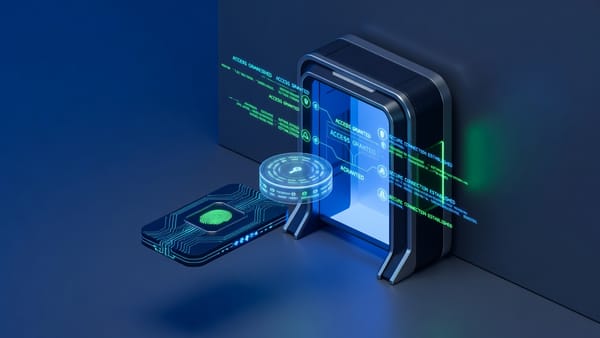



No single frontier artificial intelligence model is capable of detecting more than 40 percent of software vulnerabilities on its own. If your creative production, digital visualization engine, or client delivery pipeline relies on a solitary machine intelligence to verify code and digital assets, more than half of your critical systemic weaknesses are sailing straight into production unnoticed. In digital product visualization and generative brand design, we often obsess over surface fidelity and aesthetic sheen, yet the invisible scaffolding underneath remains perilously brittle.
After working through this with dozens of clients over my seventeen years curating visual identities and interactive 3D architectures, I recall an autumn evening in London when an automated pipeline deployed a complex WebGL configurator that collapsed under load because a singular neural auditor missed a glaring memory leak in the shader code. What nobody tells you is that a single model operates with an inherent aesthetic and structural bias; it validates what conforms to its idiosyncratic training weights and ignores the rest. That quiet disaster crystallised a fundamental reality for me: trusting a solitary synthetic perspective to safeguard your digital ecosystem is an architectural illusion that modern design operations can no longer afford.
The Quiet Revelation Behind Unit 42 Frontier AI Defense
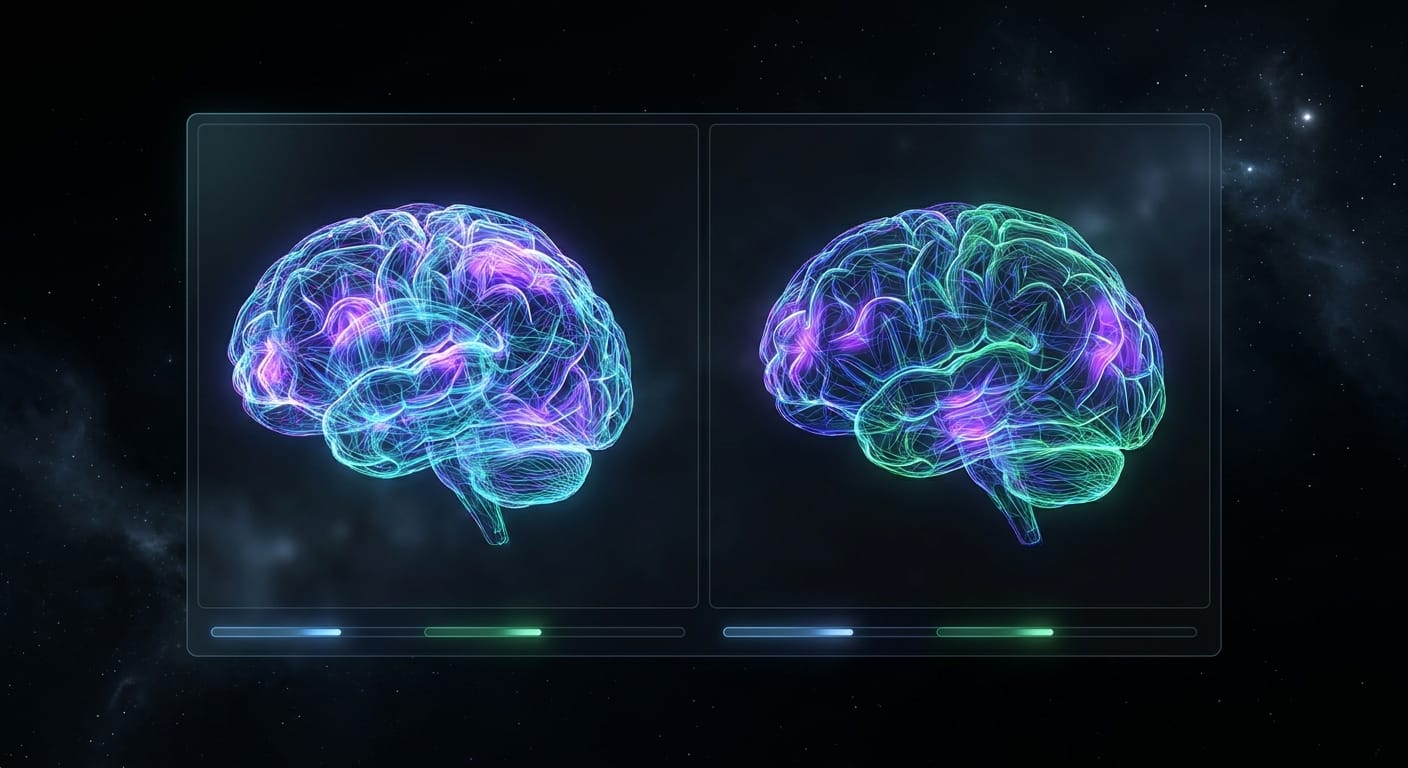
On September 22, 2026, Palo Alto Networks unveiled its Unit 42 Continuous Frontier AI Defense, an operational framework running Claude Mythos 5 from Anthropic and GPT 5.6 Cyber developed by OpenAI in tandem. While enterprise marketing celebrated the sheer computational horsepower, the most profound insight remained quietly tucked inside the technical brief. The researchers discovered that the vulnerability overlap between these two titan models was less than 10 percent.
Consider the mathematical weight of that statement. Two of the most sophisticated cyber reasoning models ever compiled, examining identical digital repositories, viewed the world through radically discordant lenses. Claude Mythos 5 identified flaws that GPT 5.6 Cyber treated as clean syntax, while GPT 5.6 Cyber caught catastrophic vector exploits that bypassed Mythos entirely. When combined into an integrated pipeline, however, internal test runs yielded a full year of traditional penetration testing results in just three weeks, surfacing 3.2 times more high and critical vulnerabilities than legacy manual reviews.
According to Gartner, multi-agent validation networks are swiftly overtaking monolithic evaluation engines across top-tier digital studios. In the realm of product visualization, where brand aesthetics converge with procedural code on platforms like GitHub, this disparity explains why monolithic evaluation consistently fails creative technology teams.
The Ensemble Matrix: Treating Disagreement as Signal
To navigate this landscape, creative directors, digital product leads, and visual systems architects must adopt an ensemble mental model. In classical studio art, master draftsmen relied on Chiaroscuro-the dramatic interplay of light and dark-to reveal depth that uniform illumination could never expose. Software resilience and visual asset integrity demand the exact same philosophical approach.
When two distinct frontier models disagree on whether an asset or script is secure, that friction is not noise to be smoothed away; disagreement is your highest-fidelity diagnostic signal.
When services firms deploy multi-model pipelines, consensus should never be forged through blind compromise. Instead, treat divergence as an urgent invitation for deeper human discernment. If one engine flags an asset pipeline as compromised while another approves the build, that tension pinpoints the exact boundary where synthetic intuition has reached its horizon. Recent research highlighted by Harvard Business Review suggests that teams orchestrating cognitive dissonance between AI models resolve high-risk blind spots twice as fast as those enforcing single-platform conformity.
The Extinction of Point-in-Time Audits in Design Delivery
For decades, enterprise visual studios and digital service agencies relied upon the sacred ritual of the annual audit. A specialist agency would spend six figures, produce a 120-page document, and grant a transient seal of approval. In an ecosystem powered by continuous automated deployment, live rendering on AWS, and cloud-native creative toolsets from Microsoft, that ritual is entirely obsolete.
As analytical studies from McKinsey confirm, digital vulnerabilities now evolve at the velocity of synthetic iteration. A brand visualization suite that passed inspection at nine in the morning can easily manifest critical runtime failures by midday following an automated dependency update. The Unit 42 benchmark proves that security is not a destination or a periodic certificate, but an ongoing visual and structural posture. Point-in-time assessments provide nothing more than a retrospective illusion of safety.
The Fragility of the Monolithic Delivery Engine
What nobody tells you about single-model pipelines is how intoxicating their speed feels initially. Running a single API endpoint to check design tokens, dynamic shaders, and database connectors produces a frictionless dashboard. But frictionlessness is frequently the companion of ignorance. When your lone model encounters a blind spot, it does not fail loudly; it simply marks the anomalous code as benign, silently passing vulnerabilities to your downstream users.
Your Immediate Implementation Protocol
Transitioning from an outmoded single-model mindset to an ensemble verification posture does not require re-engineering your entire infrastructure overnight. It requires an intentional aesthetic and technical pivot toward epistemic diversity.
- Deconstruct Monolithic Verification: Identify every automated gatekeeper in your deployment pipeline that relies on a solitary large language model for security or quality assurance.
- Pair Asymmetric Models: Implement dual-model verification utilizing divergent foundation weights, such as pairing reasoning engines from Anthropic and OpenAI across your core repository builds.
- Automate Disagreement Escalation: Construct your CI/CD orchestration to pause and alert senior technical leads specifically when your ensemble models render divergent verdicts.
- Retire the Annual Review: Shift budget allocation from static third-party annual reviews into persistent, continuous synthetic evaluation loops that run alongside active visual development.
Design clarity is not solely about the refinement of pixels or the balance of typography; it is an uncompromising honesty about the integrity of the digital medium itself. By embracing multi-model ensembles, we trade artificial complacency for verified structural truth.
How will you reconstruct your team's verification pipelines this week to ensure model disagreement is harnessed as an asset rather than silenced as an error? Bring this question to your next technical review or share your perspective in the comments below.