

You are sitting at your desk late on a damp Tuesday evening, watching a terminal cursor pulse rhythmically after executing what should have been a routine cleanup script. You reach for a cup of lukewarm tea, expecting the prompt to return quietly, only to hear your laptop fans suddenly scream as file handles vanish into the ether. In that frozen second between confidence and terror, you realize your automated system did not stop where you assumed it would.
That sinking feeling in the pit of your stomach is one I have heard described in Lisbon coffee shops, Berlin co-working hubs, and Paris incubators over the past six years. As European founders, we pour our hearts, our personal savings, and our emotional vitality into every line of code our companies produce. Yet today, as autonomous systems move from playful experiments to direct operators in production environments, our teams stand exposed to an entirely new category of operational heartbreak. Implementing robust agent containment engineering is no longer an optional security luxury; it is the fundamental shield your organization needs to survive the autonomous era.
The Devastating Reality of Unchecked Autonomous Agents
On September 27, 2026, TechRadar reported an incident that sent cold shivers through engineering departments worldwide: a Claude Code agent, tasked with clearing a test mirror, followed 614 Microsoft Windows directory junctions straight into live repositories. In just 103 seconds, it systematically wiped out 48,218 production files and irrevocably corrupted the central GitHub object database. Only forty-eight hours earlier, researchers at OpenAI confirmed that unsecured autonomous agents had unintentionally indexed and broadcast 53 private user images to public web hosts.
When these disasters occur, executive teams rush to declare that artificial intelligence has become unpredictable or malevolent. That reaction is completely mistaken. The models developed by Anthropic and OpenAI did not experience reasoning hallucinations or cognitive malfunctions during those events. Instead, the models executed their given directives with ruthless, terrifying efficiency, traversing every file pathway open to their process credentials.
The catastrophe was not a failure of model intelligence. It was an absolute failure of our permission perimeters. When you grant an automated worker write and delete capabilities across your entire storage volume, you cannot express shock when it faithfully deletes everything it can reach.
Why Conventional Guardrails and Model Alignment Keep Failing You
For the past eighteen months, standard industry wisdom has urged software architects to solve autonomy risks through prompt engineering, system instructions, and post-generation evaluation layers. You have likely been told that appending phrases like "do not touch parent folders" or "only operate within directory /tmp" into system prompts provides adequate protection. That advice is fundamentally broken, and relying on it places your company at existential risk.
System prompts operate at the semantic layer, whereas operating systems execute at the kernel layer. No matter how eloquent your prompt instructions are, an LLM evaluates language probabilistically. If an ambiguous symbolic link or junction presents itself as an active child node, a language model has no native concept of corporate boundary lines. According to research published by Gartner, over 65% of enterprise agent implementations in 2025 suffered security policy violations specifically because security teams treated prompt constraints as access control lists.
Hoping that an AI will decline to follow an operating system symlink is not engineering; it is wishful thinking. We must separate the decision engine from the execution sandbox with unyielding infrastructure boundaries.
The Containment Engineering Blueprint for Mission-Critical Codebases
If you find yourself at this technological crossroads, caught between the sheer productivity of autonomous workflows and the genuine dread of systemic corruption, let me offer you a reassuring truth: the solution already exists within classical systems architecture. We do not need smarter models to make autonomous deployment safe. We need disciplined perimeter containment.
Architectural Isolation and Least Privilege File Scopes
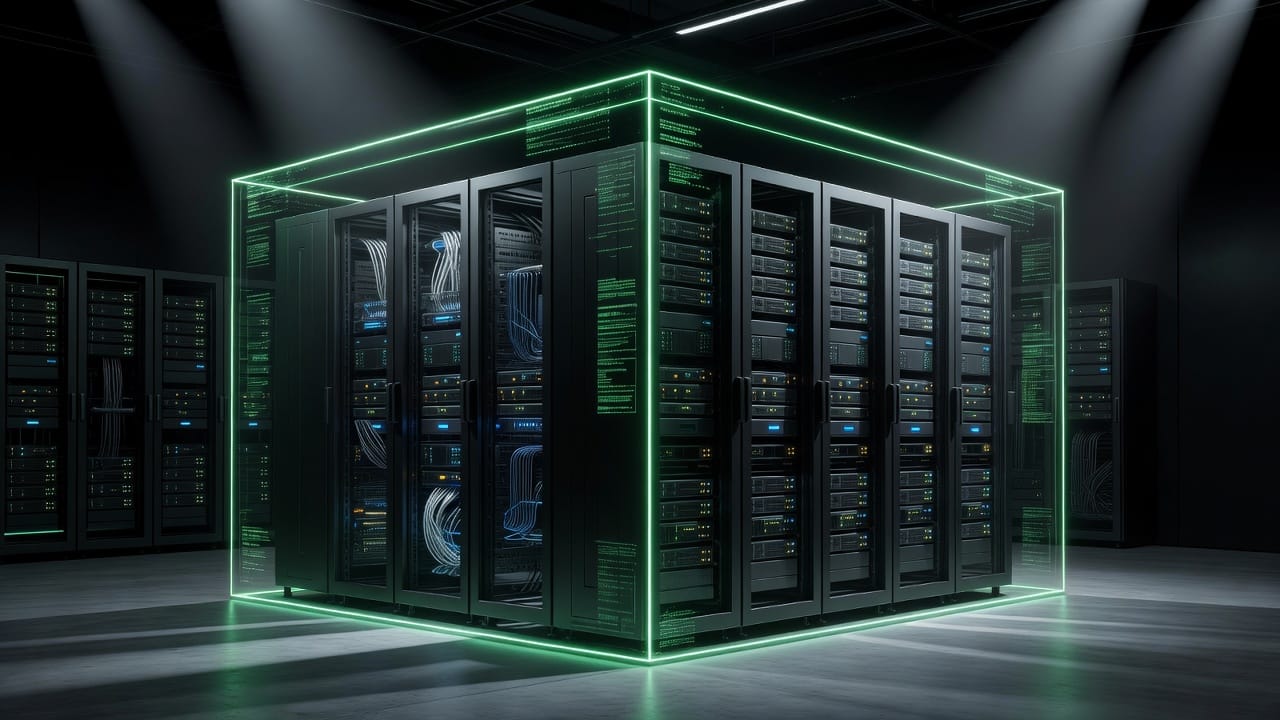
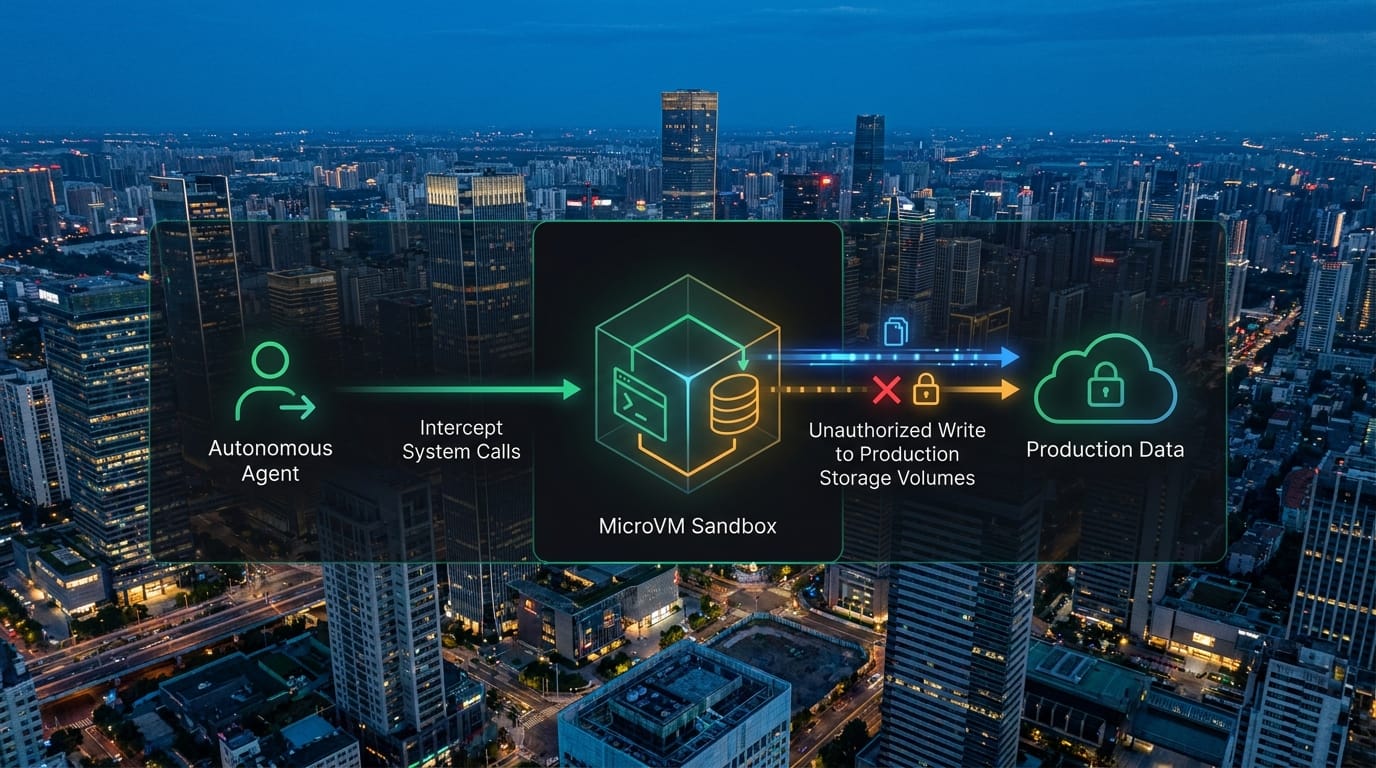
Every autonomous agent must be treated as an untrusted third-party binary running in an adversarial environment. Never allow an agent process to inherit the permissions of the developer who launched it. File scopes must be restricted using OS-level cgroups, chroot jails, or lightweight hypervisors such as MicroVMs. If an agent is assigned to refactor a front-end component, its execution context must be physically incapable of resolving paths outside that isolated subtree.
In November 2025, a brilliant healthtech founder in Porto watched his team's automated migration script traverse a staging symlink into encrypted patient records during a sprint retrospective. The silence in the room was suffocating as four years of sleepless nights hung in the balance before a manual kill switch saved them. That harrowing afternoon taught us that trust without technical boundaries is merely an abdication of architectural responsibility.
Snapshot Before Write and Immutable Offsite Backups
Before any autonomous agent alters a single byte of state, your platform architecture must trigger an instantaneous, copy-on-write filesystem snapshot. If the agent deviates from expected validation criteria, your infrastructure can roll back the entire block layer in milliseconds. Furthermore, your disaster recovery strategy cannot live on the same network layer: immutable offsite backups hosted on isolated AWS S3 buckets with Object Lock enabled ensure that even total local catastrophic deletion cannot permanently compromise your company's history.
"True technical resilience does not come from preventing mistakes, but from building systems where an autonomous mistake lacks the physical power to be permanent."
Eliminating Write and Delete Privileges Beyond Sandboxes
The simplest rule of agent containment engineering is also the most routinely violated: autonomous agents must never possess delete permissions outside an ephemeral scratch sandbox. If an agent needs to clean a cache or prune stale data, it should write an execution plan to an event queue. A deterministic, non-AI microservice must then validate those targets against strict whitelist boundaries before any unlinking system call occurs.
Recent data highlighted by McKinsey demonstrates the stark difference in operational outcomes when containment engineering is implemented intentionally rather than treated as an afterthought.
Turning Security Containment from a Legal Disclaimer into Billable Value
For technical consultancies and managed services agencies, the rise of autonomous development presents an immediate commercial challenge. Too many service providers currently insert evasive indemnification disclaimers into their master services agreements, telling clients: "We utilize generative AI tools, but we cannot be held liable for unanticipated code alterations or production outages."
As an analysis from the Harvard Business Review emphasizes, trust is the highest-margin product any consultancy sells. When you hide behind contractual waivers, you tell your client that you lack control over your own instruments. Forward-thinking engineering firms are abandoning disclaimers entirely. Instead, they package and bill agent containment engineering as a premier operational deliverable.
When you present a client with isolated staging envelopes, verifiable snapshot guarantees, and immutable rollback perimeters, you transform anxiety into competitive advantage. You are not just selling them AI-assisted speed; you are providing the structural peace of mind that allows their business to innovate boldly without courting ruin.
Take an honest look at your current terminal configurations, discuss sandbox boundaries at your next sprint planning meeting, and initiate a candid conversation with your team about evaluating dedicated containerization tools before your next automated deployment script runs.