


The widespread belief that artificial intelligence inference costs are marching on an inexorable, permanent descent toward zero is a dangerous fiction. For the past three years, enterprise leaders have treated foundational model tokens like bandwidth or raw storage, designing delivery contracts under the naive assumption that technological deflation would continually bail out their architectural inefficiencies. They mistook an aggressive, venture-backed land grab subsidy for an immutable physical law. Now, the structural physics of high-density silicon and power generation have caught up with the balance sheet, dismantling the illusion.
The Subsidy Illusion: Why the Era of Cheap Inference Has Collapsed
On September 25, 2026, The Information unveiled a financial revelation that sent shockwaves through boardrooms worldwide: DeepSeek doubled its annualized run-rate revenue to 1 billion dollars. This exponential climb was not fueled by torrential user acquisition or volume dumping. Instead, it was catalyzed almost entirely by raising API prices between 2.3 to 4.5 times across its model tiers, executing this maneuver with zero reported enterprise churn. Even more telling was the underlying operational reality, revealing an extraordinary API gross margin of 82.9 percent, juxtaposed against the modest 39 percent gross margin reported by OpenAI in the first quarter of 2026.
This seismic divergence illustrates what thermodynamicists and systems architects have understood for decades: algorithmic compression cannot indefinitely outrun kinetic realities. The dramatic price increases by DeepSeek demonstrate that once enterprise reliance is secured, pricing power migrates instantly to model providers who control sovereign compute clusters. As noted in research published by Statista, enterprise token consumption expanded fourfold between 2024 and 2026, yet the cost per million tokens has sharply decoupled from historical declines.
What enterprise executives failed to recognize was that initial API pricing models operated as loss leaders designed to cultivate computational dependence. When bleeding-edge reasoning models require thousands of chained internal tokens before emitting a single coherent response, the compute density per query increases exponentially. The mathematical consequence is undeniable: foundational intelligence is shifting from an era of subsidized colonization into an aggressive margin-extraction phase, leaving unhedged enterprises directly in the line of fire.
The Unhedged Option: Why Fixed-Price Delivery Destroys Enterprise Margins
What nobody tells you is that every IT consultive body, system integrator, and digital agency quoting fixed-fee AI implementation contracts today is effectively underwriting a naked short call option on global compute volatility. When an agency signs a multi-year agreement promising automated document triage, customer intelligence extraction, or autonomous agent workflows for a predetermined flat retainer, they are guaranteeing output while absorbing an uncapped variable liability. If token prices multiply by threefold, the service provider swallows the variance until contract margins invert entirely into bankruptcy.
Standard industry advisory practices have failed practitioners miserably because they lean on legacy cloud economic models. In classical software migrations to AWS or Google Cloud, compute unit economics reliably dropped as hardware depreciated and virtualization layers matured. Generative reasoning breaks this paradigm. According to analytical surveys by Gartner, over 60 percent of enterprise AI deployments initiated under fixed-price scopes in 2025 suffered significant cost overruns within twelve months due to uncontrolled reasoning loops and shifting vendor pricing schedules.
When an ecosystem tolerates fixed-price bids in the presence of hyper-volatile input costs, delivery firms compromise quality to preserve viability. They truncate context windows, throttle systemic recursion, and substitute capable foundational reasoning engines with inferior open weights without telling their clients. This degradation leads directly to brittle implementations and systemic failure across production environments.
Architectural Resilience: The Three Pillars of Compute Risk Management
After working through this with dozens of clients across Tokyo, Zurich, and Silicon Valley, I have come to view compute not as electricity, but as a perishable commodity requiring rigorous financial and technical hedging. To survive this structural repricing, technology organizations must build an operational triad based on rigorous engineering discipline and commercial defense.
First, organizations must implement granular token metering per deliverable. Every business outcome-whether resolving a support ticket, synthesizing an SEC filing, or parsing supply chain schematics-must carry a definitive token telemetry tag. Without per-transaction metering, establishing actual gross margins remains pure guesswork. Second, master services agreements must mandate dynamic inference repricing clauses. Contracts must explicitly separate implementation labor from computational consumption, incorporating dynamic pass-through billing or floating index corridors tied to underlying inference indices, insulating vendors from upstream monopoly adjustments.
Third, technical architects must implement model portability by design. Proprietary SDK lock-ins are an existential design liability. Systems must be engineered behind strict semantic abstraction gateways that can dynamically route prompts across disparate inference endpoints-from enterprise hyperscalers like Microsoft Azure to open frameworks hosted on sovereign clusters powered by IBM infrastructure-balancing cost, latency, and operational performance in real time.
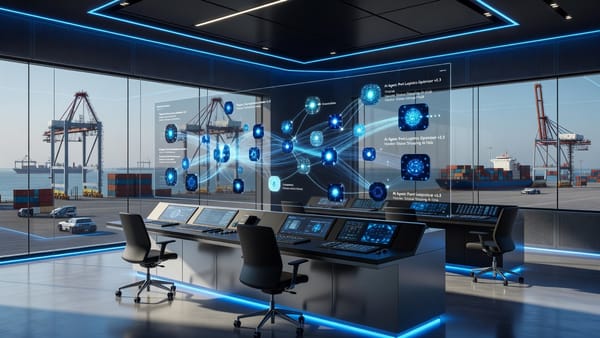
Late last autumn, I sat inside the quiet operations center of an autonomous logistics client in Tokyo as our telemetry dashboards lit up in crimson. Their mission-critical routing pipeline had experienced an unexpected 380 percent token spike following a proprietary vendor model deprecation; because our architecture employed strict decoupled abstraction layers, our orchestrator programmatically rerouted five million daily routing instructions to an optimized self-hosted quant model within four minutes, averting a catastrophic monthly margin collapse while preserving round-the-clock vehicle dispatch across the archipelago.
Treating AI inference as an endlessly deflationary public utility is a failure of structural imagination. The organizations that thrive in this decade will treat computational capacity as an exotic commodity that must be continuously hedged, metered, and dynamically routed.
The imperative is structural: building workflows directly tethered to a single API gateway without automated fallbacks is no longer merely poor engineering; it is profound corporate negligence.
Operationalizing Compute Hedging in Enterprise Workflows
How does an enterprise operationalize this posture without paralyzing its current development velocity? The answer lies in establishing rigorous engineering protocols paired with modernized commercial instruments. According to strategic frameworks formulated by McKinsey, companies that institutionalize dynamic compute governance capture double the return on operational expenditures compared to peers relying on unstructured licensing arrangements.
Begin by auditing every active client contract and internal project pipeline. Classify workflows based on their algorithmic elasticity: identify which applications require deep multi-step reasoning capabilities versus those that can be handled by deterministic code or smaller distilled models. As scholars at the Harvard Business Review have observed, the pursuit of monolithic AI models often obscures the dramatic efficiency gains achieved through targeted, task-specific architectures.
Implementing Contractual Repricing Corridors
Ensure that commercial frameworks feature clear mathematical trigger thresholds. If provider token costs deviate by more than 15 percent within any rolling sixty-day window, base billing rates must auto-calibrate across the delivery boundary. This transforms systemic vulnerability into shared enterprise alignment, motivating both customer and integrator to optimize prompt engineering and model selection collaboratively.
Establishing the Abstraction Firewall
At the software layer, enforce a uniform JSON interface for all internal applications. No enterprise engineer should invoke a proprietary client library directly within domain logic. By enforcing a proxy orchestration layer, your platform engineering team retains sovereign authority to redirect traffic away from suddenly extortionate providers to cost-effective alternatives overnight, preserving capital without breaking production workflows.
In classical Japanese philosophy, we speak of shakkei, or 'borrowed scenery'-the practice of incorporating the background landscape into the harmonious composition of a garden. For the past three years, the tech sector borrowed the subsidized scenery of cheap artificial intelligence without acknowledging the landscape belongs entirely to those who own the silicon, the cooling towers, and the grid. That landscape has reasserted its sovereignty. Those who build with structural discipline, dynamic contracts, and rigorous compute awareness will construct enduring empires; those who depend on permanent subsidies will fade as the real cost of computation reclaims its toll.
How will you fundamentally restructure your enterprise contracts and software architecture this quarter to safeguard your margins against unpredictable compute repricing?